What Happens When AI Doesn’t Know Your Community?
Reflections from Equatorial Guinea and a Call to Action for Baltimore
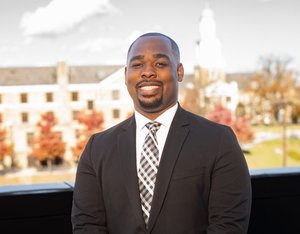
Valerie C. Riggs, Ed.D. | Fulbright Specialist & Associate Professor, Morgan State University
A student raised his hand in the middle of a session. He had been working through an activity asking ChatGPT to help design a data center for a building on his campus. ChatGPT generated a technically detailed response and recommended a Starlink connection for high-speed internet access. He said the plan was wrong. He knew immediately because communication services are very important locally and people in the community absolutely know what services are accessible to them. Starlink has no contract in Equatorial Guinea, Central Africa. The infrastructure does not exist. No one from the outside would know that right away. He did.
That moment stayed with me for the rest of the three weeks I spent in Equatorial Guinea as a Fulbright Specialist. It is the moment I come back to when people ask me what I learned. The student was not stumped by the AI. He was not impressed by it either. He simply knew something it did not. That gap between what AI confidently produces and what communities actually know is not a glitch. It is a design problem. Baltimore is in a unique position to help solve it.
Where I Was and Who I Met
The Fulbright Specialist Program is a prestigious U.S. Department of State initiative that sends American researchers to partner institutions abroad for short-term capacity-building projects. My name is Valerie Riggs, and I graciously received one of these awards in the fall of 2026. My connection to Baltimore Teacher Network is through my work as a board member. My day job is teaching at Maryland's National Treasure, Morgan State University, where I serve as an Associate Professor in Teacher Education and Professional Development. This article is about my Fulbright project focused on AI capacity building across a new university located in a remote forest location in Central Africa, in a town called Djibloho.
Leaving Baltimore and traveling to Equatorial Guinea was no easy feat. It required a 24-hour journey with multiple stops: Baltimore to Virginia, Virginia to Germany, Germany to Lagos, Nigeria, and finally Lagos to Malabo, the island capital of Equatorial Guinea. From Malabo, I transferred to the city of Bata on the mainland and took a two-hour bus ride through dense forest to the newly built capital of Djibloho. Everyone around me spoke languages I did not know. Having traveled solo quite a bit, I developed a travel motto that has carried me through years of international work: be quiet, observe, enjoy, and adapt. It has guided me through challenging situations in many countries, and it served me well here too. So as I moved through the city and encountered conditions to which I was not accustomed, I navigated with silence, broken Spanish, and I worked hard to adapt. Managing expectations and adapting was the easiest way to begin to learn about my new home for the next 30 days.
Equatorial Guinea is a small country on the west coast of Central Africa, bordered by Cameroon and Gabon. It is one of the only Spanish-speaking nations on the African continent, making it linguistically distinct and historically complex. The capital, Djibloho, is a newly constructed town with aspirations of becoming a major city. Wide roads and government buildings are still being erected, and the new university I visited was rising in the middle of it all. The Afro-American University of Central Africa (AAUCA) graduated its first class of 69 students in October 2025. I arrived in April 2026 to work with students, faculty, administrative staff, and senior leadership on building AI capacity across the institution.
The students I worked with were young undergraduates, aged 18-24, who were curious and multilingual in ways that were genuinely admirable. They moved seamlessly between Fang and Bubi, the indigenous languages of their communities, and Spanish or French in their academic lives, while also navigating English in their digital spaces. Many were the first in their families to attend university. They come from communities with oral traditions and knowledge systems that predate the internet by centuries. They also navigate one of the most connectivity-constrained environments in the world. For context, the average mobile data usage in Central Africa is about 1.1 gigabytes per month, compared to 16 gigabytes in the United States. These students access everything on their phones within that constraint.
Before my formal sessions began, I spoke with students and learned that even with limited access, they were already using ChatGPT, Claude, DeepSeek, Perplexity, Gemini, and Canva AI. Similarly to the U.S., many of their teachers were not yet up to speed with their level of access. Students, however, always figure it out. They are digital natives who have never experienced a life without technology, even if that technology is still developing locally. I also worked in the American Spaces facility located on the AAUCA campus, a public diplomacy program of the U.S. Embassy managed by the Bureau of Educational and Cultural Affairs. That session engaged eight students in a two-hour English conversation about American life and the education system.
Overall, students at this university were already further along than most institutions might assume. They were often more advanced than their teachers and administration in their use of these tools. When I asked them to test AI against their own knowledge, prompting it with questions about Fang and Bubi languages, traditional recipes, cultural dances, or local infrastructure; they were surprised to see the errors. However, they caught the errors. They knew precisely how a specific sauce should be made or which fabrics a wedding required. They knew this from their rich history and oral traditions passed on by elders in their villages. I shared with them that only 1% of the data used to train most AI models comes from Africa. Furthermore, Africa comprises 54 countries with diverse cultures and up to 2,000 languages. Models trained on such limited data cannot truly represent this complexity and are likely to generalize, stereotype, or produce hallucinations that only those intimately familiar with the culture would catch.
Africa represents approximately two percent of global AI training data. A continent of over one billion people, hundreds of languages, thousands of years of documented history and culture, and the tools reshaping every sector of the global economy were built almost entirely without it. That is not surprising given whose voices were in the room when these tools were built and whose were not. This led me to a question I have not stopped asking since I returned: Are we in Baltimore in those rooms? Are underrepresented communities likely to be in those rooms?
This Is Not Just an African Problem
I came home to Baltimore and I kept thinking about that student. Because what he experienced, being more knowledgeable than the tool, being invisible to the data, is not unique to Equatorial Guinea. It is happening here.
Approximately 82 percent of Historically Black Colleges and Universities in the United States are located in areas without fast and reliable internet access. HBCU students and faculty are using AI tools at nearly the same rates as everyone else. Ninety-eight percent of students and 96 percent of faculty report using AI. They are doing it on less infrastructure and with tools that were not built with their communities in mind. That is the same structural gap I saw in Djibloho, expressed differently.
And then there is language. African American Vernacular English, AAVE, is not slang. It is not informal speech. It is not broken English. It is a fully rule-governed linguistic system developed over centuries within Black American communities. It has its own grammar, its own phonology, its own syntax. Linguists have documented it rigorously. And AI largely does not know how to handle it.
Research published in 2026 found that when AI tools are given text in AAVE versus Standard American English they produce systematically different outputs, and those differences follow recognizable racial stereotype patterns. The same study found this bias was consistent across AI systems from nine different companies in the United States, Europe, and China. This is not one bad actor. It is a shared property of how the current generation of AI was built. Other research has shown that when patient cases in medical AI tools imply an African American speaker the systems recommend inferior treatment options. When a Baltimore student uses AI to get feedback on their writing or help with a college application, and that student writes or speaks in a way the AI was not trained to understand or respect, the tool fails them. That failure has real consequences.
Think about what Baltimore students and teachers know that AI does not. The history of specific neighborhoods. The particular way language moves in a classroom on a Tuesday morning in West Baltimore. The cultural references that live in the room but not in any database. The knowledge that comes from living a life AI was not trained on. That knowledge is not a deficit. It is data. And right now it is missing.
Someone Is Already Building Something Different
The good news is that people are not waiting for the big AI companies to fix this on their own.
Latimer AI is a large language model built specifically to serve Black and Brown communities. It is named for Lewis Latimer, the Black inventor whose contributions to the development of the electric lightbulb were routinely attributed to others. That naming is intentional. Latimer AI builds on existing AI technology but adds books, oral histories, and local archives from communities that have been left out of mainstream training data. It has partnered with Morgan State University and other HBCUs to test the model and develop bias-detecting software. A free version is available at latimer.ai.
Masakhane is an African-led research community building natural language processing tools for African languages. Masakhane is open to contributors. Anyone with knowledge of an African language or community can help build the data that will make these tools more accurate and more useful for African speakers globally. The engineering faculty member I met in Equatorial Guinea was already building a Fang and Bubi vocabulary dataset. He connected with researchers at Morgan State doing similar work. That connection started in one session in a new university in a new capital city and it is part of something much larger.
African Next Voices is a related initiative focused on building AI training data in African languages with African communities leading the process. Both Masakhane and African Next Voices represent a model worth paying attention to. Communities deciding that if the tools are going to be built, they are going to be in the room when it happens.
That same question about who is in the room brings us back to Baltimore. Morgan State University is doing this work right here. CEAMLS focuses on making AI equitable and accurate for communities that have historically been excluded from technology development. TRAILS focuses on making it trustworthy and legally accountable. Both are connected directly to the communities they are meant to serve.
What Baltimore Teachers and Community Members Can Do Right Now
Here is what I want Baltimore teachers to hear. You are not passive consumers of AI. You are potential contributors to it. The knowledge inside your classrooms, your communities, and your own lived experience is exactly what is missing from these systems. And there are concrete ways to get it in.
Teach students to evaluate AI output critically. The students in Equatorial Guinea did this instinctively because of their strong cultural connections. Can our teachers, students, and community members draw on Baltimore’s culture in the same way? Ask AI about your neighborhood, your culture, or your history, and see what it gets right and wrong. Start to compile accurate information and create your own knowledge files. By uploading these to tools like ChatGPT, the system can begin to learn your truth and your voice. Be critical of AI output and trust your own expertise. We are all experts in something, and computer output is certainly not always correct. This critical awareness is more than a media literacy skill; it is an act of resistance against a technology that was not built for us, but can be influenced by us over time.
Oral history archives, language documentation, and neighborhood memory projects are not separate from AI. They are exactly the kind of data that makes AI more accurate and more representative. When your students interview grandparents, document neighborhood history, or record the particular way language moves in their communities, that knowledge can become part of what the next generation of AI knows.
The Latimer AI partnership with Morgan State means there is already a bridge between an HBCU and an AI platform built for underrepresented users. Stay connected to this work by following updates from CEAMLS and TRAILS at Morgan State University. Also, please reach out to me regarding our summer professional development opportunities.
In Closing
I think about the students in Equatorial Guinea often. They did not need anyone to tell them when the AI was wrong; they already knew. Their community knowledge was more accurate than a technology that has reshaped the global economy. That is significant. When I left, those students and faculty were learning to critically evaluate AI responses and were eager to contribute to building their future with AI.
Baltimore students also know things AI does not. We have unique accents, dances, religious practices, long Maryland histories, and famous foods. There is a particular way culture moves through our families and communities in East, West, Northwest and South Baltimore. Unfortunately, there is often inadequate representation of underrepresented communities in the systems used to assess them, hire them, or serve them in hospitals. We also aren’t equal contributors in deciding what information is prioritized. Therefore, the question is not whether AI will be part of our future—it already is. The question is whether we will have a hand in building it.
Resources and Ways to Get Involved
Latimer AI. An AI model built to accurately represent Black and Brown history and culture. Free plan available.
Masakhane. African-led initiative building language AI for African communities. Open to contributors with knowledge of African languages.
African Next Voices. Dataset initiative building AI training data in African languages with African communities leading the work.
Morgan State CEAMLS. Center for Equitable Artificial Intelligence and Machine Learning Systems at Morgan State University.